




 Join Us

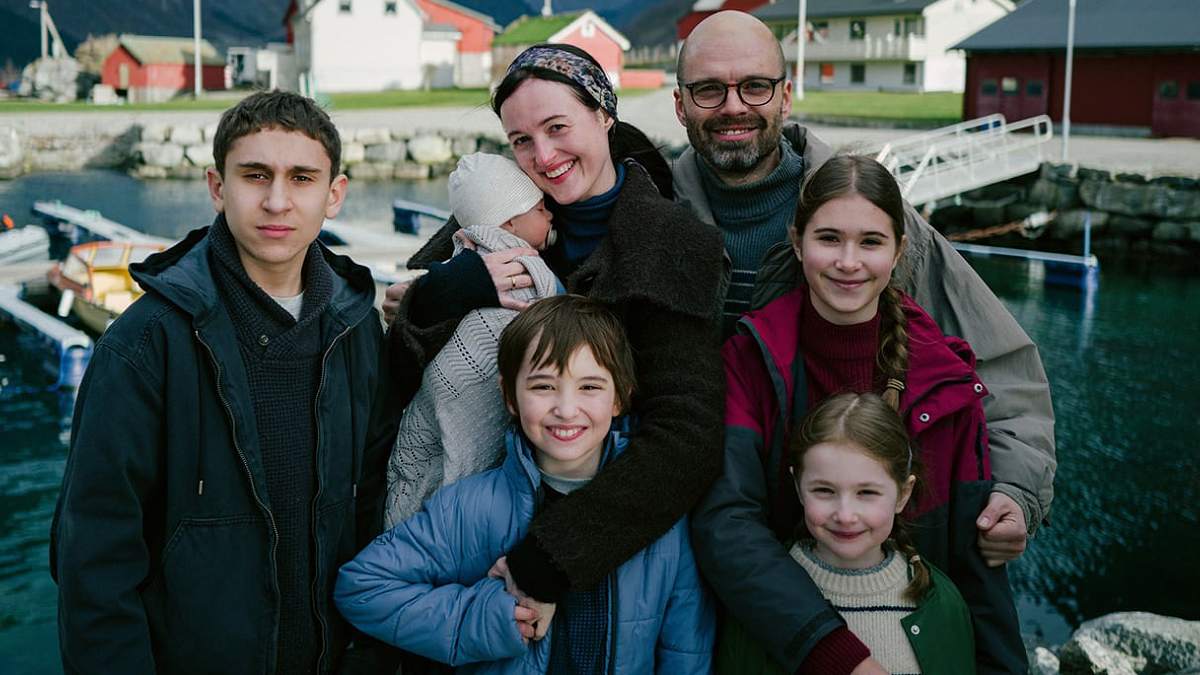
Written and directed by Cristian Mungiu, Fjord (2026) is a tense legal thriller and family drama loosely inspired by Norway’s real-life Bodnariu family case. Starring Sebastian Stan and Renate Reinsve, the film earned Mungiu his second Palme d’Or at the 2026 Cannes Film Festival and is Romania’s official Best International Feature entry for the 99th Academy Awards. Set against a remote Norwegian fjord, it explores the collision between conservative religious values, state intervention, and the children caught in the crossfire.
Fjord Plot
Devoutly religious Romanian Mihai Gheorghiu and his Norwegian wife, Lisbet, move with their five children to a quiet village in Lisbet’s homeland. They quickly befriend their progressive neighbors, the Halbergs: school headmaster Mats, his wife Mia, and Mats’s teenage daughter, Noora. Despite the sharp ideological divide between the two households, Gheorghius’ eldest daughter, Elia, and Noora form a deep, affectionate bond.
That peace shatters when Elia arrives at school with bruises on her shoulder and back. After a teacher, Frida, spots the marks and a sibling hints that their parents caused them, the school alerts the authorities. Norwegian Child Welfare Services, represented by caseworker Gunda, and local police forcefully remove all five children, launching both a civil custody battle and a criminal investigation.
Trending

As the village fractures along cultural lines, Mia steps up to represent Mihai and Lisbet in court, pulling both families into the legal crossfire. Mungiu avoids easy villains: the authorities come across as rigid and culturally suspicious, while Mihai’s strict household raises uncomfortable questions about control and discipline. With the exact cause of Elia’s bruises still murky, the case builds toward a high-stakes civil ruling.
Disclaimer: Spoilers Ahead for Fjord
Fjord Ending Explained
What happens after the civil trial?
With Mia representing them, Mihai and Lisbet win their civil case and get their five children back. However, the victory is incomplete, as a separate criminal investigation and pending trial still loom over them. Fearing a conviction that would permanently break up their family, the Gheorghius slip out of Norway before dawn without telling anyone, boarding a ferry to Denmark on their way back to Romania.
Were Mihai & Lisbet actually guilty of abusing their children?
Mungiu deliberately leaves it unanswered. No physical abuse is ever shown on screen, and the exact cause of Elia’s bruises (whether parental punishment, gym class, or an accident) is never conclusively proven. While the parents admit to strict discipline, the film leaves it ambiguous whether they crossed into criminal abuse or were misread by an uncompromising system. By skipping a final courtroom verdict, Fjord shifts the focus to the destructive certainty of both sides: the state and the parents each claim the moral high ground, yet neither truly listens to the children.
What do Noora’s final scene & walking on water mean?
Realizing that the Gheorghius have vanished, Noora tracks Elia’s phone and races to the harbor just after the ferry pulls away. Devastated, she runs down to the fjord, steps out across the water as if walking on it, and cries out, “I love you,” as the boat disappears.
The visual is a callback to an earlier scene where Noora watched Elia seemingly walk on water near the boats. Symbolically, the ending belongs to the two girls. Mihai was uneasy about how close they had become, and the state cared only about procedure. By fleeing, Mihai wins custody, but at the cost of severing the one relationship not built on control. Noora’s tearful walk across the water underscores the depth of their bond, reminding viewers that the children’s genuine love is the real casualty of the adults’ war.
Do the Gheorghius change at all by the end of the film?
There are subtle signs of growth, though not a complete transformation. While the film opens with the children apologizing to their mother, it closes with softened rigidity: Lisbet apologizes to her kids, Elia is allowed to keep a phone, and their son has video games. Still, the ending remains bittersweet. The family stays together, but only by uprooting the children once again and cutting off the life they were building in Norway.
Advertisement
For more such stories, check out TV updates!
Must Read: Under Siege: 5 Reasons To Watch Netflix’s Gripping Colombian Political Thriller
Follow Us: Facebook | Instagram | Twitter | YouTube | Google News


