




 Join Us

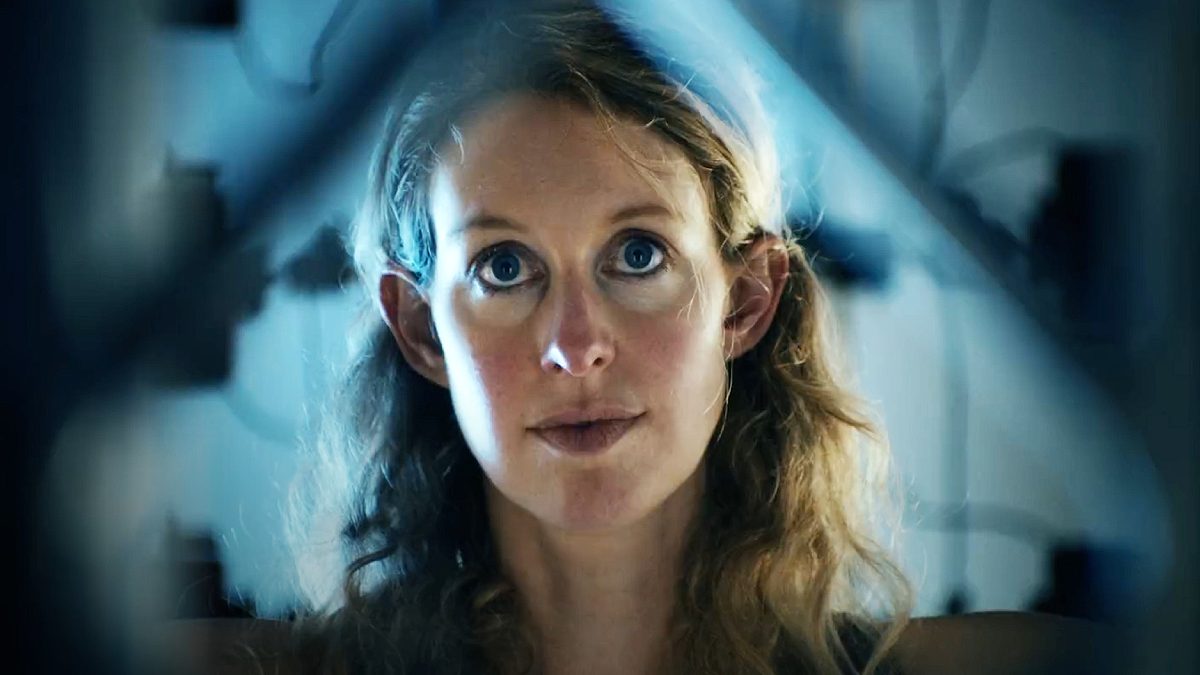
Directed by Nathan Fielder and Lance Oppenheim for A24, You Can See Everything (2026) is a 174-minute documentary that blends investigative journalism, psychological portraiture, and meta-theatrical performance. Following its Telluride Film Festival premiere and October 2026 theatrical release, the film starts as an intimate look at disgraced Theranos founder Elizabeth Holmes in her final weeks of freedom before evolving into a three-year study of image control and documentary ethics. Featuring surprise appearances by Amanda Seyfried and Christopher Abbott in its second half, it asks whether an audience or a filmmaker can ever truly know the person behind a public persona.
You Can See Everything Plot Summary
The film opens in 2023, 34 days before Elizabeth Holmes reports to federal prison for fraud. Hoping to counter the public narrative, Holmes and her partner, Billy Evans, invite Nathan Fielder and his crew to document her final weeks with their family. In tense, deadpan interviews, Fielder probes Holmes’s unblinking composure, trying to tell if she genuinely believes her own claims of innocence or is simply performing for the camera.
After Holmes goes to prison, the film jumps to 2025. With Evans insisting Fielder cannot record another interview behind bars, the focus shifts to how Holmes’s image is managed in her absence. Evans begins speaking as her on social media, approves promotional billboards featuring an image she previously said she hated, and even creates an AI version of herself that he can direct, leaving Fielder increasingly uneasy about their dynamic.
Trending


To fill the gap left by Holmes’s incarceration and to examine her media portrayal, Fielder casts Amanda Seyfried (who played Holmes in The Dropout) alongside Christopher Abbott as Evans. Working from transcripts and Fielder’s accounts of unfilmed conversations and prison visits, the actors reenact key moments. As Seyfried watches footage and steps into Holmes’s shoes, the process becomes a live debate over who owns a person’s story, culminating in a confrontation about Fielder’s own objectivity.
What Does The Final Ocean Flashback Reveal About Nathan Fielder?
Earlier in the film, Holmes invites Fielder to swim in the ocean, and he declines, citing his dislike of cold water, which initially appears to be him maintaining a professional boundary. At the very end, after Seyfried questions his personal bias toward Holmes, the film cuts back to 2023 to reveal he actually did go swimming with her and looked genuinely happy. Holding this footage back until the final minutes exposes Fielder’s selective editing and proves he was never the neutral observer he claimed to be.
What Does Amanda Seyfried Mean By “It’s Very Complicated”?
When Seyfried smiles at Fielder and he asks why, she replies, “It’s very complicated,” before the dialogue cuts off. The line captures the film’s central paradox: Seyfried is reacting to the realization that Fielder’s protective attitude toward Holmes has crossed into murky territory while also reflecting how impossible it is to reduce Holmes, Evans, or Fielder to a simple hero or villain.
How Are Nathan Fielder & Billy Evans Similar?
Throughout the second half, Fielder and Seyfried are appalled by Evans speaking for Holmes and building an AI version of her while she is in prison. Yet the ending forces viewers to see that Fielder is doing something remarkably similar. By scripting his unrecorded prison visits and having Seyfried perform them, Fielder constructs his own version of Holmes and asks the audience to trust his framing, thereby proving his theatrical recreation is just as artificial as Evans’s AI.
Why Does You Can See Everything End With A Disputed New York Times Quote?
The final words before the credits come from a 2023 New York Times profile of Holmes: “They’re not playing me. They’re playing a character I created.” Holmes and Evans dispute the quote, claiming she said “a character they created,” while the Times stands by its reporting without definitive proof. Ending on this unresolved dispute drives home the film’s thesis: without access to another person’s mind, every account, whether from a journalist, a partner, a TV drama, or a documentary filmmaker, is just an interpretation.
What Does The Title You Can See Everything Really Mean?
The title is deeply ironic. On the surface, it suggests the illusion of total transparency, or the idea that putting a camera in front of someone for weeks will reveal who they really are. By the credits, the film argues the exact opposite: even with hours of footage, reenactments, and close-ups, you can never see everything inside another person’s head, and the filmmaker is always deciding what stays out of frame.
You Can See Everything Trailer
Advertisement
For more such updates, check out Hollywood News
Must Read: Clashing Through The Snow Ending Explained: Do Ryan & Hannah Save Their Jobs & End Up Together?
Follow Us: Facebook | Instagram | Twitter | YouTube | Google News


