



 Join Us

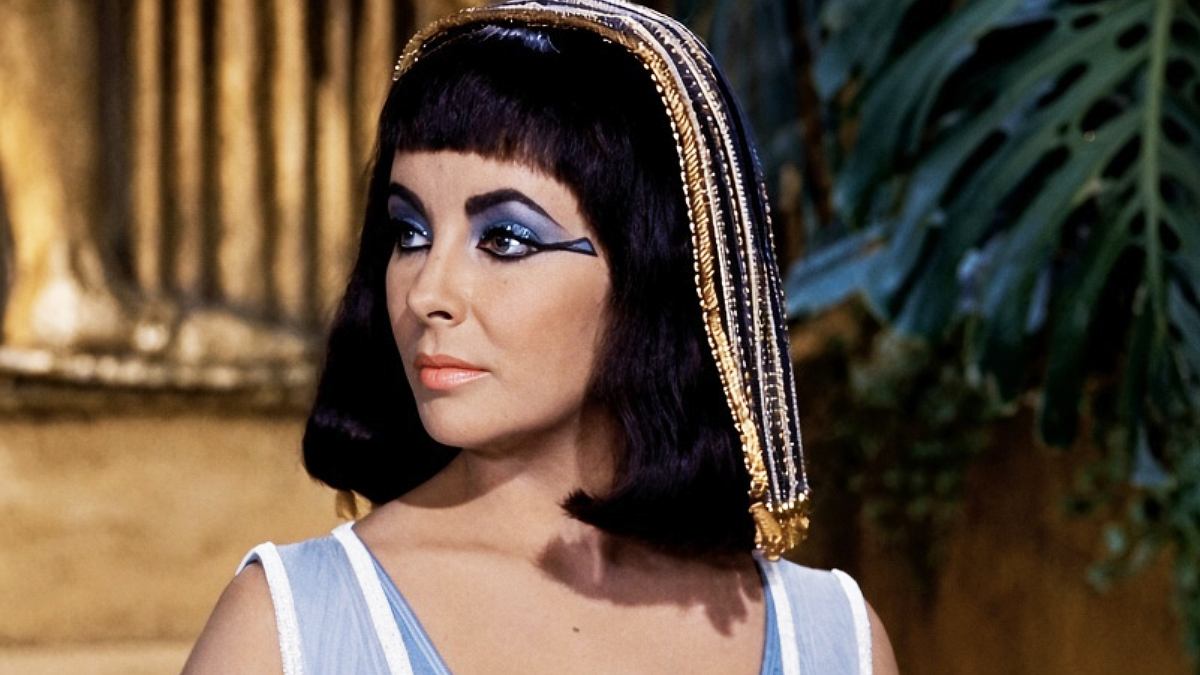
When Cleopatra opened at New York’s Rivoli Theatre on June 12, 1963, it was already the most expensive film ever made. It went on to become the biggest hit of 1963, earning $57.7 million at the box office in the United States and Canada (Box Office Mojo). Even so, for 20th Century Fox, it felt like barely getting out alive.
Why Did Cleopatra Become the Most Expensive Film of Its Time?
None of it was meant to happen. The project started as a cheap, quick remake of a 1917 silent film to be shot on Fox’s shrinking backlot. Then Elizabeth Taylor came on board. Fox had looked at other actresses, but Taylor became the first woman to get $1 million for a role. According to Den of Geek, she reportedly told her husband, “Tell him I’ll do it for a million dollars.” She also wanted the film shot abroad in 70 mm.
The money began to drain away almost at once. Taylor got sick, and production in London stopped. After 16 weeks, Fox had only about 10 minutes of usable footage. Director Rouben Mamoulian was fired, and the studio abandoned the whole effort and moved to Rome, where the Roman Forum, Alexandria, and Cleopatra’s barge all had to be rebuilt.
Trending

Joseph L. Mankiewicz took over, and Rex Harrison and Richard Burton replaced the original Caesar and Antony. The very public affair between Burton and Taylor added scandal as well. One crew member recalled that each day’s shoot depended on whether the two had gotten along the night before. Mankiewicz later said the film was “conceived in a state of emergency,” and, by his own account, it ended in blind panic, according to Far Out Magazine.
Cleopatra Production Costs
The movie’s bills were huge. Production costs came to about $31 million, and that doesn’t count the $5 million spent on the abandoned British shoot. Distribution, prints, and advertising added another $13 million. Accountants found strange items like $100,000 for paper clips and $3 million for “miscellaneous” expenses, per Vanity Fair.
Darryl Zanuck came back to run the studio and took charge of the edit. Mankiewicz turned in a cut of about five hours, and Zanuck let him go, telling the press the director had “earned a well-deserved rest.” Mankiewicz wanted to release the film in two parts, but Zanuck insisted on a single release. Mankiewicz still had a hand in the final touches, while Taylor and Burton both spoke out against the way Zanuck reshaped the film.
How Cleopatra Nearly Bankrupted 20th Century Fox?
The box office numbers looked great, and the film stayed at number one through the end of September. But Fox’s share of that money, reported as $26 million in domestic rentals, was far less than what the movie had cost. It is still the only film to be the top earner of its year and lose money anyway, per Screen Rant. To stay afloat, Fox sold off a big part of its backlot, land that later became Century City. Studio president Spyros Skouras, who had backed the film, lost his career over it.
The recovery was slow. Zanuck sold the television rights to ABC for $5 million, which helped. Cleopatra also won four Academy Awards, though it lost Best Picture to ‘Tom Jones.’ The real rescue came in 1965 with ‘The Sound of Music.’ Fox badly needed a lifeline, and the musical gave it one by earning hundreds of millions of dollars.
More than sixty years later, Cleopatra is still remembered for its size and its cost. It showed that a film can win the box office and still nearly sink the studio that made it.
Advertisement
For more such updates, check out Hollywood News.
Must Read: Matthew Perry Almost Lost His Iconic Friends Role As Chandler Because Of A Failed TV Pilot
Follow Us: Facebook | Instagram | Twitter | YouTube | Google News